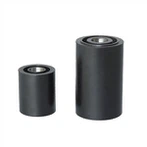
NdFeB magnets are mostly composed of neodymium, iron and boron, and neodymium is easy to oxidize. If there is no coating, it will rust, oxidize, and rot. Can do zinc, nickel, gold, silver, black nickel, epoxy and other magnet electroplating. Nickel is the most common and often preferred for all kinds of coatings. The actual three coatings of nickel-plated magnets are nickel, copper, and nickel. These three coatings make our magnets more durable than the more common single nickel magnets. Our gold-plated magnets are actually four-pole plating of nickel, copper, nickel and gold.
Nd-Fe-B material is brittle and easy to peel and crack. Therefore, it is not suitable for processing materials without processing experience. Processing magnets generates heat. If not carefully controlled, it can affect the magnet and even ignite toxic substances when burning. Machining of the magnet is not recommended.
NdFeB has high coercivity and is not easy to demagnetize. The maximum working temperature of ordinary NdFeB magnets is 80°C, and when it reaches 80°C, the magnetic properties will be irreversibly lost. Its Curie temperature is 310 degrees. If the Curie temperature is exceeded, the magnetism is completely lost. We have some magnets that are high temperature resistant and can withstand higher operating temperatures. Details: NdFeB performance grades and physical parameters
If you have never touched a NdFeB magnet, you will be shocked by its powerful magnetic force. The magnetic force of Nd-Fe-B magnet is 10 times higher than that of ferrite. If you are using ferrite magnets, if you replace the NdFeB magnets, you will find that a small NdFeB magnet can completely replace the ferrite magnetism, or even more.